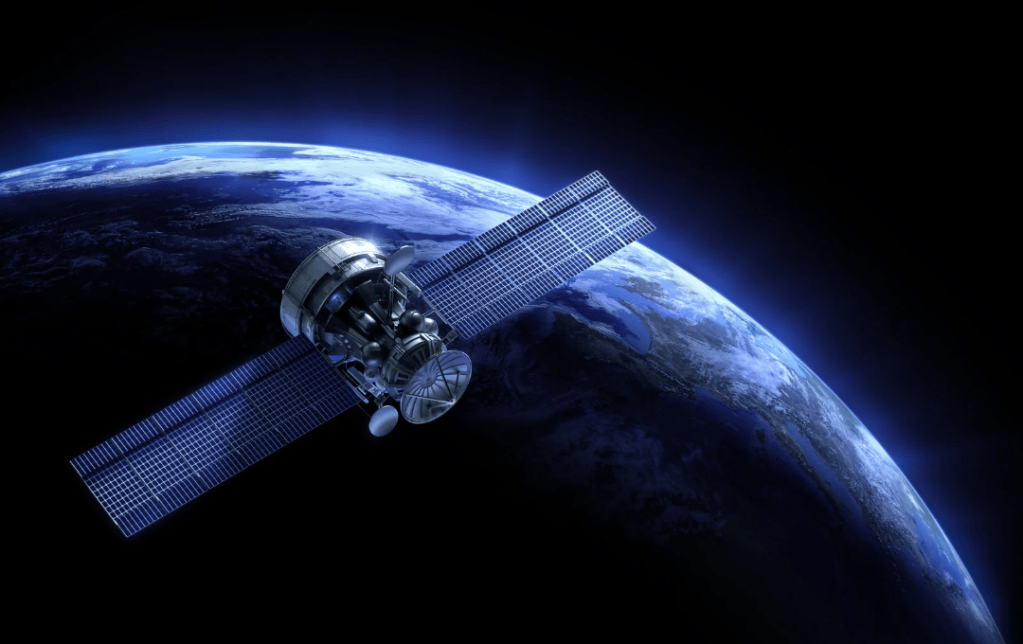
The satellite has become the unblinking eye of modern warfare. Optical satellites photograph by day, thermal sensors detect heat by night, and synthetic-aperture radar peers through cloud, smoke and darkness. For commanders, this creates an uncomfortable arithmetic. A vehicle, command post or ship may be concealed from a soldier on the next ridge yet remain plainly visible to a sensor hundreds of kilometres overhead.
The response now taking shape is not to shoot down satellites, blind them with lasers or jam their links. Those approaches are expensive, escalatory and often temporary. The quieter alternative is to change what the satellite sees. Engineers and defence firms are developing canopies, coatings and materials that reduce a target’s heat, suppress its radar reflection and obscure its outline. The aim is modest in wording and demanding in practice, namely to make an object harder to detect, classify and track from orbit.
A canopy against the sky
The most immediately tangible idea comes from Vigil Autonomy, an American startup, whose Air Cover system resembles a flying tarp. Four drones hold the corners of a fabric canopy above a vehicle or group of soldiers. The covering is intended to reduce the target’s visibility to thermal cameras and synthetic-aperture radar, the two sensor families most likely to expose equipment that conventional camouflage cannot hide.
The company says the drone-supported version can remain aloft for roughly two hours, while a static version can be stretched between supports. It also claims that artificial intelligence allows the canopy to track a moving friendly vehicle. Public details remain thin, which is itself informative. Concealment systems often sound more impressive in a promotional video than they perform against a determined sensor operator with several viewing angles and a library of historical imagery.
The central limitation is geometry. A canopy above a vehicle may defeat a camera looking straight down. It may do much less against a satellite or drone observing from an angle. Defence Express notes that Air Cover appears best suited to blocking overhead thermal observation, while its claimed usefulness against radar is less clear. Synthetic-aperture radar is used for terrain mapping and wide-area change detection as well as for spotting individual targets, which makes a simple overhead screen an imperfect answer.
That does not make the idea trivial. A commander moving an armoured vehicle between positions, concealing a fuel dump for a few hours or protecting troops during a halt may value even a temporary reduction in exposure. The trade-off is equally plain. The system adds drones, batteries, fabric and maintenance to a unit already burdened with equipment. It may also create a new visual signature, since four drones holding a large canopy are not subtle.
Engineering heat away
A more ambitious approach attacks the problem at the level of physics. Researchers at the University of Illinois Urbana-Champaign and the Technical University of Denmark have demonstrated a three-dimensional thermal invisibility cloak. Rather than merely wrapping a hot object in insulation, the device redirects heat around it.
The cloak combines a 3D-printed aluminium lattice, which conducts heat efficiently, with a rubber-like material that conducts it poorly. Together they guide thermal energy around a protected volume while preserving the temperature pattern of the surroundings. In infrared imagery, the concealed region can resemble empty ground.
Earlier thermal cloaks tended to work in two dimensions or only from particular directions. The new device is designed for complex three-dimensional shapes and can function from multiple viewing angles. Its creators say it can hide intricate geometries while keeping the protected interior thermally stable.
The implications for military procurement are considerable. Vehicles, generators, radar installations and ships radiate heat, and that heat gives them away to infrared satellites. A mature version of this technology could allow an engine cover, exhaust system or hull section to manage thermal emission actively. The vehicle would still be warm. It would simply look less like a vehicle and more like its surroundings.
The caveat is substantial. The researchers identify self-heating objects as the next challenge, since a cloak must control heat generated within the protected volume as well as heat arriving from outside. A device demonstrated under laboratory conditions may struggle with a diesel engine, a running turbine or a crowded command post. Still, the direction of travel is clear. Thermal camouflage is evolving from a passive blanket into an engineered thermal system.
Camouflage becomes multispectral
Saab, the Swedish defence company, frames the problem as one of signature management. Modern sensors observe targets across visible light, infrared, thermal and radar bands. A net that hides a tank from the human eye may do little against a thermal camera. A coating that reduces heat may leave a sharp radar return untouched.
Saab’s Barracuda range includes thermal nets and personal camouflage intended to reduce thermal signatures and disrupt visual outlines. The company says its thermal net can cut thermal radiation by up to 90 percent, while its personal camouflage poncho can reduce it by up to 70 percent. Such figures deserve scrutiny. Performance varies with sensor type, range, weather, background temperature and the angle from which the target is observed.
The lesson for buyers is that concealment is a systems problem. A vehicle may require a low-emissivity surface, exhaust masking or cooling, radar-absorbing material and visual camouflage suited to local terrain and season. No single material is likely to defeat every sensor. The more credible approach combines several measures, each reducing one part of the target’s signature.
Materials that swallow radar
Radar presents a different challenge. Synthetic-aperture radar does not depend on sunlight or thermal radiation. It transmits microwave energy and measures what returns. The strength of that return depends on an object’s shape, material, orientation and surface texture. A flat metal plate can be conspicuous even when painted in perfect woodland colours.
Research published in Materials describes an optically transparent metamaterial absorber that converts strong radar reflections into absorbed energy. The reported design reduces radar cross section by more than 10 dB across an 8–18 GHz band.
The paper concerns satellite solar panels, yet the underlying principle applies to concealment on the ground and at sea. Materials that absorb or redirect radar energy can weaken the signal a SAR satellite receives. A reduction of 10 dB corresponds roughly to a tenfold fall in reflected power. Real-world results depend on frequency, incidence angle, polarisation and the geometry of the object being hidden.
A related study in Advanced Composites and Hybrid Materials describes a multifunctional meta-absorber intended to work against infrared, radar and microwave radiometric detection. The research points toward surfaces that manage several signatures at once. In time, a hull, tarp, net or coating might reduce visible contrast, thermal emission and radar reflection without requiring separate covers for each threat.
A market for measured invisibility
For governments and defence companies, the question is less whether a technology can hide something in a laboratory than whether it can do so reliably against a named sensor. Procurement should therefore demand evidence across frequencies, viewing angles, weather conditions and target states. A canopy that defeats a directly overhead thermal camera may fail against a side-looking radar satellite. A thermal cloak tested in controlled conditions may be overwhelmed by the heat of an operating engine.
The wider strategic point is that satellite imagery is becoming harder to deny through force alone. Anti-satellite weapons invite escalation. Jamming may be temporary and indiscriminate. Signature management offers a quieter path. It asks a military to control the heat, radar return and visual outline of its assets before an adversary’s sensor processes the image.
The systems most likely to matter will not promise invisibility. They will deploy quickly, survive mud, rain and rough handling, integrate with existing vehicles and infrastructure, and produce measurable reductions in detection. In a world where orbit has become an extension of the battlefield, the most valuable camouflage may be the kind that makes a satellite look twice and see nothing useful.


Leave a Reply