
In the deserts beneath Iran, in the granite mountains of western China, and in the tunnel networks threading under the Korean peninsula, military engineers are rediscovering an old truth. The deeper one digs, the harder one becomes to kill.
For decades the dominant story of warfare concerned visibility. Western militaries sought to see farther, strike faster and destroy targets with exquisite precision. Satellites, stealth aircraft and precision-guided munitions appeared to make concealment obsolete. During the unipolar years after the Cold War, America’s way of war depended upon exposing and eliminating fixed infrastructure from above. Air supremacy was assumed. Surface targets looked increasingly vulnerable.
That assumption is collapsing.
The proliferation of drones, loitering munitions, cruise missiles, ballistic missiles and counter-unmanned aerial systems has created a battlefield saturated with sensors and interceptors. Armies that mass in the open are rapidly detected. Aircraft that loiter become targets. Even rear areas once considered safe now sit within reach of long-range strike systems. The result is a paradoxical return to subterranean warfare. As the skies grow more crowded and lethal, the earth itself is becoming the last sanctuary.
The trend can be observed across almost every serious military power. Iran has expanded hardened underground complexes after American strikes against the Fordow enrichment facility in 2025. China has spent decades constructing what American planners call the “Underground Great Wall”, a vast system of buried command centres, missile facilities and logistics infrastructure. North Korea’s military doctrine assumes survival through tunnelling. Ukraine and Russia have both adapted trench and underground positions into increasingly elaborate protected systems after two years of drone-saturated attritional warfare.
The logic is brutally simple. Above ground, survivability is eroding faster than offensive precision. Underground, physics still favours the defender.
The recent American debate over bunker-busting weapons illustrates the problem. In May 2026 DARPA issued a request for information seeking “disruptive approaches” to penetration mechanics and shock propagation control. The language reflected an uncomfortable reality. Existing bunker-busting technology is nearing the limits imposed by conventional physics.
The American strike on Fordow in June 2025 demonstrated both the extraordinary capability and the limitations of current penetrators. Seven B-2 bombers delivered 14 GBU-57 Massive Ordnance Penetrators against one of the deepest hardened facilities ever attacked. The bombs reportedly achieved their operational objectives. Yet the aftermath revealed the strategic dilemma. Iran responded by digging deeper into harder granite, reportedly extending facilities beyond the reliable reach of existing munitions.
This is the emerging cycle of military adaptation. Every advance in aerial precision drives a corresponding investment in subterranean protection. Every improvement in penetration weapons encourages another layer of rock, concrete and depth.
DARPA’s interest in manipulating shockwaves rather than merely increasing bomb weight shows how seriously American planners view the challenge. Traditional bunker-busting follows a crude logic. Heavier objects travelling faster penetrate further. But the deeper targets become, the more diminishing returns set in. There are practical limits to aircraft payloads, penetrator survivability and terminal velocity. A bomb can only become so large before logistics, delivery platforms and cost impose constraints.
Underground warfare therefore presents one of the few areas where defensive engineering retains a meaningful long-term advantage over precision strike.
The economics favour the digger as well. Excavating tunnels and hardening facilities is expensive, but designing systems capable of reliably destroying them is vastly more so. A buried command centre protected beneath mountains forces an adversary into an expensive contest involving stealth bombers, precision intelligence, specialised penetrators and repeated strikes. Even then, success is uncertain.
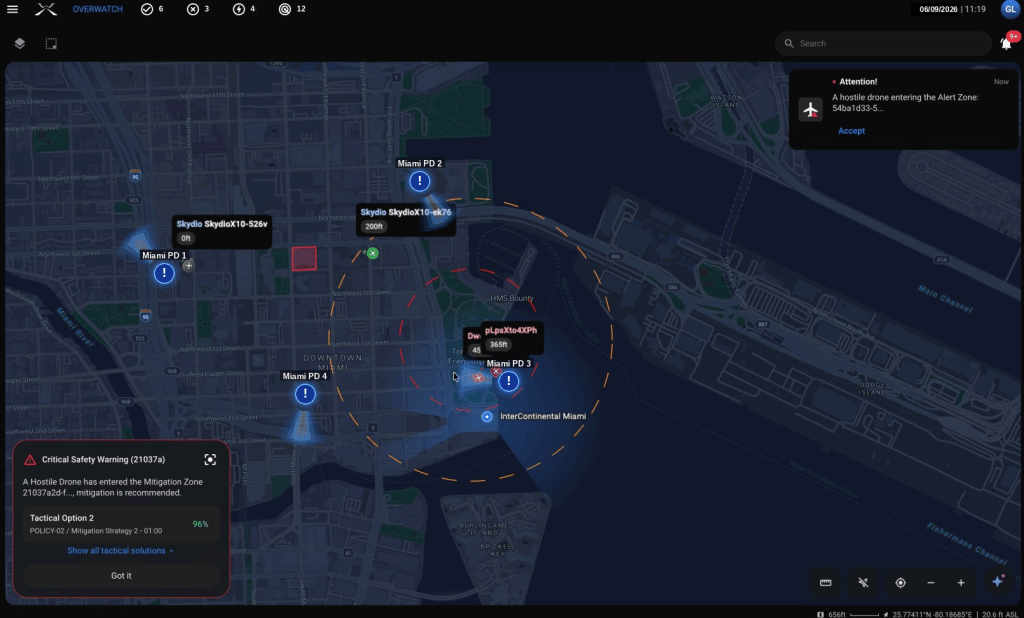
Meanwhile the offensive side of modern warfare continues to become democratised. Cheap drones have fundamentally altered battlefield exposure. In Ukraine, quadcopters costing hundreds of dollars routinely identify and destroy vehicles worth millions. First-person-view drones have extended lethal observation into every layer of the tactical battlefield. Counter-drone systems are proliferating in response, creating dense electronic and kinetic defensive environments.
The consequence is a strange inversion of military modernity. For years analysts spoke about transparent battlefields where everything could be seen. Increasingly, survival depends upon becoming invisible again.
This shift extends beyond bunkers and missile silos. Entire operational concepts are moving underground. Ammunition depots, logistics hubs, command centres and aircraft shelters are being buried or hardened. Taiwan has long invested in mountain hangars. China’s underground naval facilities on Hainan allow submarines to enter protected tunnels directly from the sea. Russia has expanded hardened command infrastructure since the invasion of Ukraine exposed vulnerabilities in conventional basing.
Even communications technology is adapting to subterranean conflict. Researchers in South Korea recently demonstrated a magnetic-induction wireless system capable of transmitting signals underground to depths of 100 metres. Such technologies may appear niche today, but they reflect a growing recognition that future military operations will increasingly occur beneath the surface.
The subterranean turn also reveals a broader anxiety about the future of airpower. Modern integrated air defence systems already make penetrating heavily defended airspace extraordinarily difficult. Drone swarms complicate the problem further by overwhelming radar and interceptor capacity. Counter-UAS systems, electronic warfare and layered missile defence are proliferating simultaneously. In such an environment, the traditional assumption that air forces can systematically dismantle enemy infrastructure becomes less reliable.
This does not mean airpower is obsolete. Precision strike remains devastating against exposed targets. Drones have transformed reconnaissance and battlefield lethality. But the cumulative effect of surveillance and interception technologies is narrowing the survivable space above ground. The battlefield is simultaneously more visible and more protected.
Underground warfare offers a rare asymmetry. Most militaries possess drones. Many possess missiles. Very few possess reliable capabilities to destroy deeply buried hardened infrastructure at scale.
That imbalance may shape strategic stability in dangerous ways. States that believe their underground assets are invulnerable may act more aggressively during crises. Buried nuclear facilities complicate deterrence calculations because they reduce confidence in pre-emptive strike options. Deep command bunkers increase leadership survivability, potentially lowering the perceived risks of escalation.
At the same time, the hunt for subterranean targets is likely to intensify. Ground-penetrating radar, seismic sensing, artificial intelligence assisted geological analysis and advanced penetrator weapons will all attract growing investment. The contest between concealment and detection is descending underground.
Yet the deeper trend is philosophical as much as technological. For three decades advanced militaries believed information dominance and precision strike would make warfare cleaner, faster and more transparent. Instead, the battlefield has become saturated, concealed and increasingly fortified. Modern war is rediscovering ancient instincts. When the sky becomes lethal, men return to tunnels.
The next great military competition may therefore concern not who controls the air above, but who survives beneath the ground below.


Leave a Reply