The United States Space Force has awarded Northrop Grumman a $398 million contract to develop a prototype military communications satellite designed to operate in heavily contested environments where adversaries may attempt to jam or disrupt U.S. communications systems.
The program, known as Enhanced Protected Tactical Satellite Communications-Prototype, or Enhanced PTS-P, is part of a broader Pentagon effort to modernize how the U.S. military communicates during warfare.
Military satellite communications systems are critical for modern defense operations. They allow commanders, aircraft, ships, ground forces, and intelligence units to communicate securely across long distances, including in areas where traditional communications infrastructure does not exist or has been destroyed. Satellite communications are also used to transmit battlefield intelligence, coordinate operations, guide military assets, and maintain connectivity between forces operating across different regions.
One of the main concerns facing military planners is that future conflicts are likely to involve heavy electronic warfare and cyber attacks targeting these communications networks. Adversaries may attempt to jam radio signals, intercept transmissions, disable satellites, or interfere with military networks in order to disrupt battlefield coordination.
Enhanced PTS-P is intended to help address those threats by testing technologies specifically designed to keep military communications functioning under attack.
The prototype will focus on demonstrating the Protected Tactical Waveform, or PTW, an encrypted communications system developed to maintain secure connectivity even in contested environments. PTW uses rapid frequency hopping, encryption, and advanced signal processing techniques that make communications more difficult to detect, intercept, or jam.
The Space Force says the demonstrations will evaluate how well these technologies perform in orbit and how effectively they integrate with military ground systems and user terminals.
Northrop Grumman will build the satellite using its ESPAStar-HP satellite bus, a platform designed for national security and commercial space missions. According to the Space Systems Command, the satellite is expected to launch no earlier than 2030.
The contract reflects a wider shift in Pentagon space strategy. For many years, the U.S. military relied heavily on a relatively small number of large and highly sophisticated satellites. While extremely capable, those systems are also expensive and potentially vulnerable because losing even one satellite could significantly impact military operations.
In recent years, the Pentagon has increasingly emphasized resilience and redundancy in space architecture. Rather than immediately committing to large constellations, the Space Force has focused more heavily on testing prototypes and gradually evaluating technologies before moving into full-scale procurement.
That approach became more visible in 2025 when the Space Force canceled a previously planned $2.4 billion follow-on procurement for a larger protected tactical communications constellation. Budget documents submitted with the fiscal 2027 request describe a “multi-phase strategy” focused on prototype demonstrations, operational testing, and incremental deployment.
The Space Force is also pursuing multiple technical approaches simultaneously. In addition to Northrop Grumman’s free-flying prototype satellite, Boeing previously developed a hosted payload version of PTS-P integrated onto two Wideband Global SATCOM satellites already built for the Space Force.
Northrop Grumman has already worked on earlier phases of the Protected Tactical Satcom program and completed critical design reviews in 2021.
In a statement accompanying the contract announcement, acting Space Force portfolio acquisition executive Erin Carper said Enhanced PTS-P represents “another important step in delivering more resilient, protected communications capabilities to the joint force.”
The program underscores how central secure satellite communications have become to modern military operations as the Pentagon prepares for future conflicts in which space systems themselves may become targets.
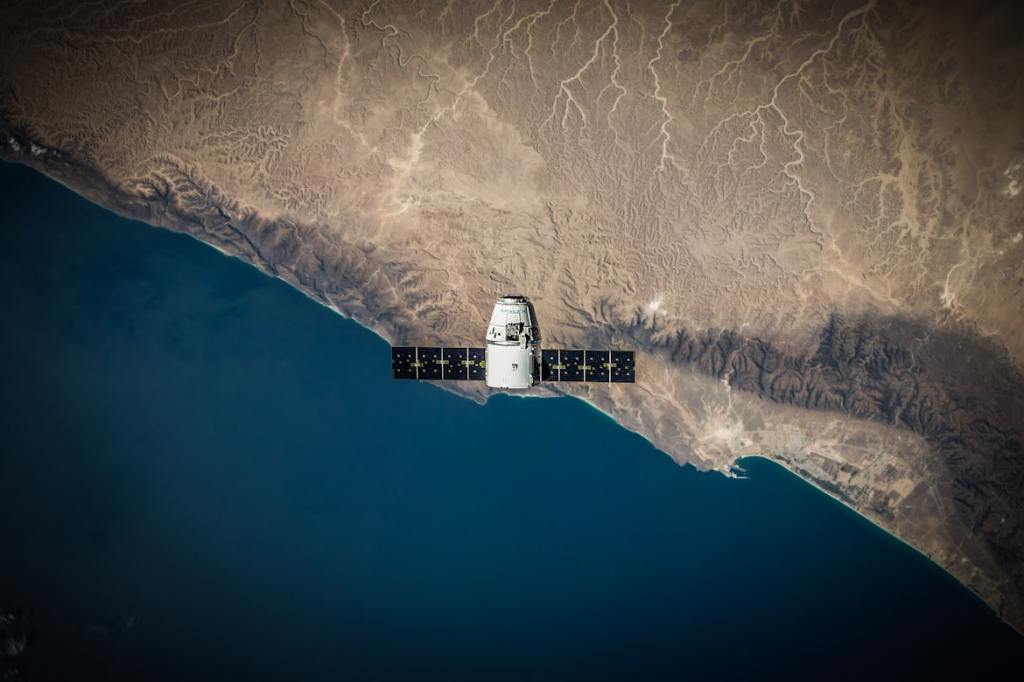
The Pentagon’s New Push for Resilient Military Satellite Communications
The United States Space Force has awarded Northrop Grumman a $398 million contract to develop a prototype military communications satellite designed to operate in heavily contested environments where adversaries may attempt to jam or disrupt U.S. communications systems.
2–4 minutes


 The Defense Circuit
Leave a comment