In the hills along Israel’s northern border, the war no longer announces itself with sirens alone. Sometimes it arrives quietly, low and slow, difficult to see and harder to stop. That is how a drone attack claimed the life of 19-year-old Sgt. Idan Fooks, an incident that has come to reflect a broader shift in the character of the threat Israel faces.
For years, Israel built one of the world’s most advanced air defense systems to counter rockets, missiles and aircraft. Those systems have saved countless lives. But the rise of small unmanned systems has exposed a different kind of vulnerability, one that is less about scale and more about precision, persistence and cost.
The difficulty begins with something that sounds deceptively simple: finding the drone.
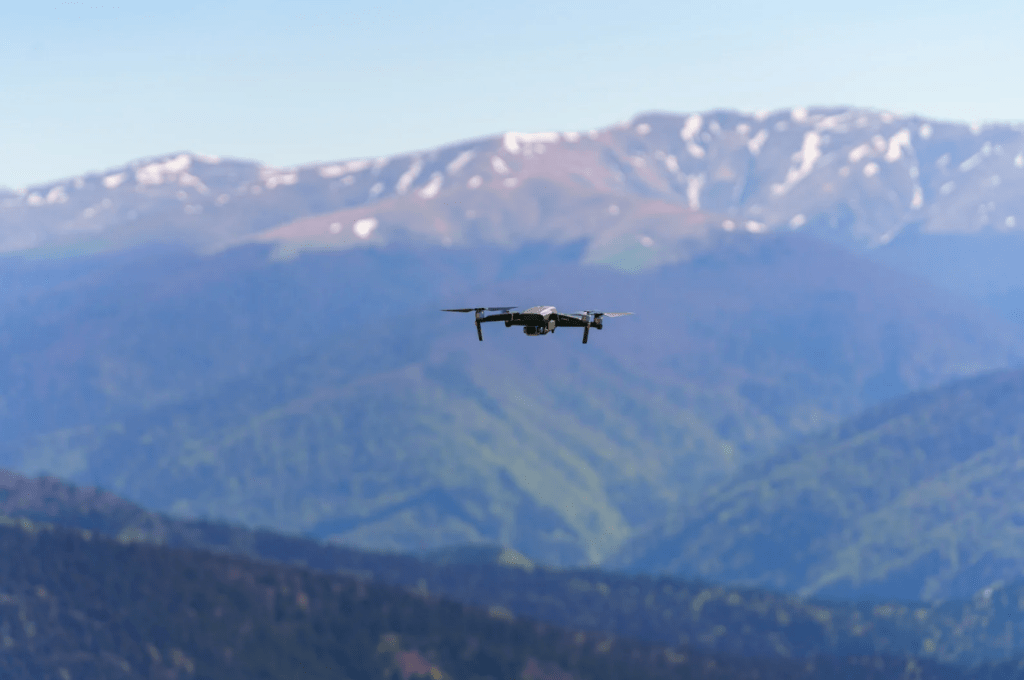
Along the northern border, terrain works in the attacker’s favor. Ridges, trees and built-up areas break lines of sight. Small drones exploit these gaps, flying low and blending into the background. On radar, they can appear faint or ambiguous, sometimes indistinguishable from birds or debris. Other sensors help, but none provide certainty. A camera requires visibility. A radio frequency detector depends on signals that may not exist. Acoustic systems struggle in noisy environments.
Operators are left piecing together fragments, trying to build a coherent picture in real time. Even then, they must decide what they are seeing. Not every object is hostile. Some are harmless. Some are friendly. The decision to act carries weight, particularly in crowded or sensitive areas where a mistake can have consequences.
When a drone is identified as a threat, the next challenge is stopping it. This is where the imbalance becomes clear. The tools designed to intercept aerial threats were built for larger, faster targets. Using them against small drones is often effective, but rarely efficient. The cost of interception can far exceed the cost of the drone itself.
Electronic warfare was meant to close that gap. Jamming signals or disrupting communications offers a cheaper way to neutralize a threat. But the adversary has adapted. Many drones now operate with a degree of autonomy or use hardened communication links that make them less vulnerable to interference.
Hezbollah has embraced this evolution. Drawing on lessons from conflicts abroad, it has integrated a wide range of unmanned systems into its operations. Some are simple, others more advanced, but all share the same advantage. They are inexpensive, replaceable and capable of slipping through even well-defended airspace.
The emergence of fiber-optic guided drones has pushed the challenge further. These systems do not rely on radio signals. Instead, they are controlled through a cable that connects the drone directly to its operator. That connection cannot be jammed in the traditional sense. It does not emit the signals that many detection systems are designed to find.
An incident near Kiryat Shmona, where a drone managed to evade interception and strike its target, has been cited as an example of how this threat is taking shape. The details are still limited, but the implication is clear. A significant portion of existing counter-drone capability is built around detecting or disrupting signals. When those signals disappear, so does part of the defense.
There is no widely deployed answer to this problem. Detecting such drones is harder. Stopping them often requires physical interception or directed energy, both of which depend on conditions that are not always present. The gap is not theoretical. It is operational.
Even without these newer systems, the challenge is already difficult. A single drone can be hard to track and engage. Multiple drones arriving at once complicate the picture further. Systems must prioritize targets, allocate resources and respond within seconds. Automation is helping, but it is not a complete solution. The numbers alone can overwhelm.
This creates a dynamic that favors the attacker. Drones are cheap and can be deployed in large numbers. Defenses are complex and costly to operate. Over time, even a high success rate may not be enough if a small percentage of threats consistently get through.
Israel’s defense industry is working to close this gap. New systems are being developed, tested and, in some cases, deployed. Advances in detection, artificial intelligence and directed energy are beginning to reshape the field. But integrating these capabilities into a cohesive and reliable system takes time. It requires coordination, training and constant adaptation.
The threat, meanwhile, continues to evolve. Changes that once took years now happen in months. What works in one engagement may not work in the next. The system must keep moving, adjusting to new tactics and new tools.
On the northern border, this dynamic is no longer abstract. It is visible in the pattern of attacks and the gaps they reveal. The death of Idan Fooks is one moment in that pattern, but it captures the broader reality. The challenge is not a lack of capability. It is the nature of the problem itself.
Stopping small drones with complete reliability remains out of reach. The objective, for now, is to reduce the threat, to close as many gaps as possible and to adapt faster than the adversary. It is a difficult balance, one that reflects a changing battlefield where even the most advanced defenses are still learning how to respond.
The Counter-Drone Problem Israel Can’t Solve…Yet.
For years, Israel built one of the world’s most advanced air defense systems to counter rockets, missiles and aircraft. Those systems have saved countless lives. But the rise of small unmanned systems has exposed a different kind of vulnerability, one that is less about scale and more about precision, persistence and cost.
4–6 minutes


Leave a comment