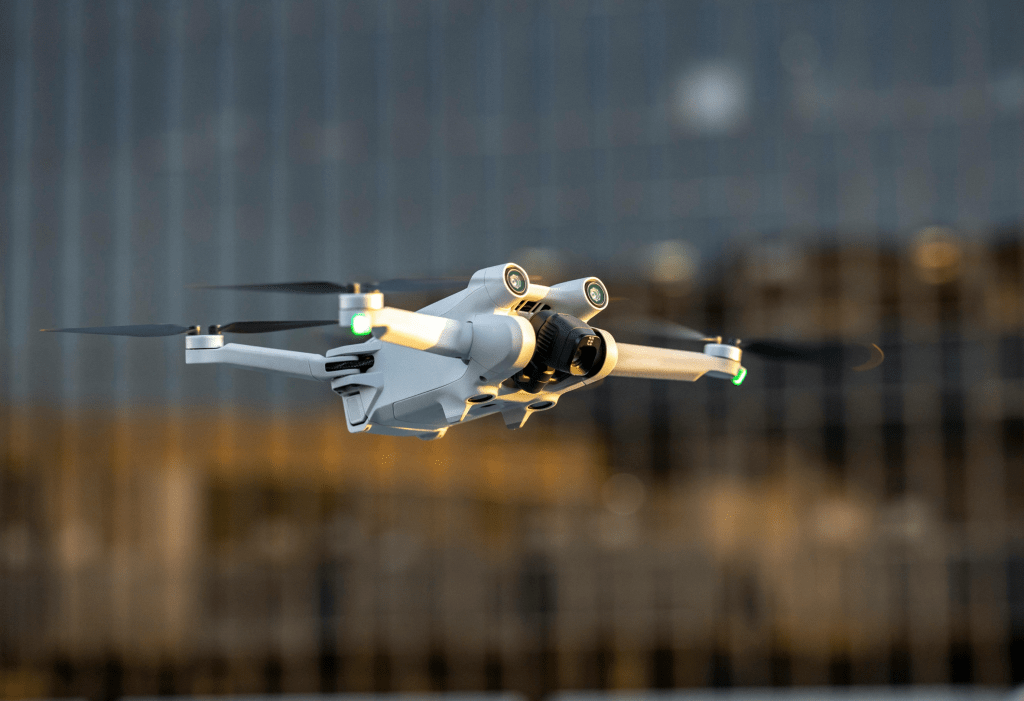
A new phase in counter-drone defense is taking shape as both MAFAT and the United Kingdom move to accelerate solutions against fiber optic-controlled drones, a class of systems that is proving resistant to traditional defenses. MAFAT has issued a public call through its startup ecosystem seeking technologies to address fiber optic FPV drones, while the UK’s UK Defence Innovation has launched a parallel request focused specifically on detection and tracking capabilities.
The rapid evolution of unmanned aerial systems is exposing a structural weakness in many existing counter-UAS architectures. Fiber optic-controlled drones, particularly in first-person view configurations, are redefining what it means to defend airspace. Designed to bypass radio frequency-based defenses, these systems force militaries and security operators to rethink long-standing assumptions about detection, disruption, and defeat.
At the core of the challenge is a simple but consequential shift. Traditional drones rely on radio frequency links for control and data transmission. Fiber optic drones do not. Instead, they are physically tethered to their operators via ultra-thin cables that carry commands and video feeds directly. This eliminates the electromagnetic signature that most counter-drone systems are built to exploit.
The implications are already visible on the battlefield. Since early 2024, Russian forces have deployed fiber optic FPV drones in Ukraine, using them for reconnaissance and precision strikes in heavily contested electromagnetic environments. Their effectiveness stems not from speed or payload alone, but from their immunity to jamming and spoofing. Ukrainian forces, in turn, are developing similar systems while racing to adapt countermeasures.
This dynamic marks a turning point. Counter-UAS strategies that rely primarily on electronic warfare are no longer sufficient against a growing class of threats that simply do not emit signals.
Why interception is uniquely difficult
Fiber optic drones present a layered interception challenge that begins with detection. Because they do not transmit RF signals, they are inherently harder to detect using traditional electronic surveillance systems. Passive RF sensors, which are widely used to identify drone activity, have nothing to lock onto. This forces defenders to rely more heavily on radar, electro-optical, infrared, and even acoustic systems, each of which comes with its own limitations in cluttered or urban environments.
Even when detected, tracking can be difficult. These drones are often small, fast, and flown at low altitude. Their FPV control allows operators to maneuver dynamically, exploiting terrain, structures, and gaps in coverage. The addition of a physical tether does not significantly reduce their agility within operational ranges that are now reportedly extending toward 20 kilometers.
Interception is further complicated by timing. Fiber optic drones are often employed in roles that demand precision and speed, including direct attack missions. This compresses the engagement window and places pressure on response systems to act quickly and decisively.
Another complicating factor is the tether itself. While it provides a potential vulnerability, tracing a thin fiber optic cable in real time is not straightforward. In some cases, Ukrainian forces have successfully followed cables back to operators, but this is situational and not a scalable interception method in active combat conditions.
Electronic countermeasures remain highly effective against conventional drones. Jamming can sever control links, spoofing can misdirect navigation systems, and protocol exploitation can force drones into fail-safe behaviors. None of these approaches work against fiber optic systems.
The absence of RF communication removes the primary attack surface. A fiber optic drone will continue to operate normally in a heavily jammed environment because its control loop is entirely physical. This creates a dangerous gap in layered defenses. Systems that appear robust on paper may fail completely when faced with a non-emitting target.
This shift does not make electronic warfare obsolete, but it does reduce its role in the mitigation phase. Detection and situational awareness remain critical, but they must now feed into a different class of response.
The return of kinetic solutions
Against fiber optic drones, physical neutralization becomes the decisive layer of defense. If a drone cannot be electronically disrupted, it must be physically stopped.
This has led to renewed focus on kinetic counter-UAS solutions. These range from direct-fire weapons to dedicated interceptors and specialized ammunition. On the battlefield in Ukraine, forces have used everything from small arms to sniper rifles to engage incoming drones once detected.
However, not all kinetic approaches are equally effective. Shotguns, often cited as a simple solution, suffer from limited range, reduced accuracy, and low energy retention. They are inherently reactive, requiring the drone to be very close before engagement is possible.
More advanced approaches are emerging to address these limitations. Companies like Drone Round are developing rifle-based counter-drone ammunition designed to increase hit probability against small, fast-moving targets. By leveraging standard military calibers such as 5.56 and 7.62×51, these solutions aim to extend engagement distances while maintaining compatibility with existing weapon systems.
At the same time, dedicated interceptor systems are gaining traction. Nordic Air Defence has introduced high-speed drone interceptors like the Kreuger 100, designed specifically to counter low-cost aerial threats. These systems represent a shift toward scalable, purpose-built kinetic interception rather than improvised responses.
Larger defense players are also adapting. Saab is advancing drone swarming technologies that could be repurposed for interception roles, while Patria is expanding modular drone platforms that support both RF and fiber optic control, reflecting the growing importance of hybrid resilience.
Despite the emphasis on kinetic defeat, detection remains foundational. Radar, electro-optical, and infrared systems are essential for early warning and tracking. Ukraine’s use of infrared and acoustic detection highlights the need to diversify sensing modalities in the absence of RF cues.
The key shift is not away from detection, but toward integration. Detection without a viable interception method is insufficient. In the context of fiber optic drones, awareness must translate into immediate and effective action.
Adapting to a changing threat model
Fiber optic drones are not a niche development. They are part of a broader trend toward resilience against electronic warfare. As adversaries continue to innovate, unmanned systems are likely to become more autonomous, less detectable, and harder to disrupt remotely.
This places a premium on layered defense architectures that do not rely on a single point of failure. Electronic warfare, kinetic interception, and advanced sensing must work together, with an understanding that some threats will bypass entire layers.
The experience in Ukraine underscores this reality. Both sides are iterating rapidly, combining technological development with tactical adaptation. Western support, including funding, training, and intelligence sharing, is accelerating this process and shaping the next generation of counter-UAS doctrine.
Fiber optic drones expose a critical vulnerability in RF-centric counter-UAS strategies. By removing the electromagnetic link, they render many traditional defenses ineffective and force a return to physical interception as the primary means of defeat.
The challenge is not only technical but conceptual. Defenders must move beyond assumptions that have underpinned counter-drone systems for years and adopt a more flexible, layered approach. This includes investing in kinetic solutions, diversifying detection methods, and integrating new technology from both established defense firms and emerging innovators.
As the threat continues to evolve, so too must the response. In the age of fiber optic drones, effective counter-UAS is no longer about disrupting signals. It is about stopping the platform itself.



Leave a comment