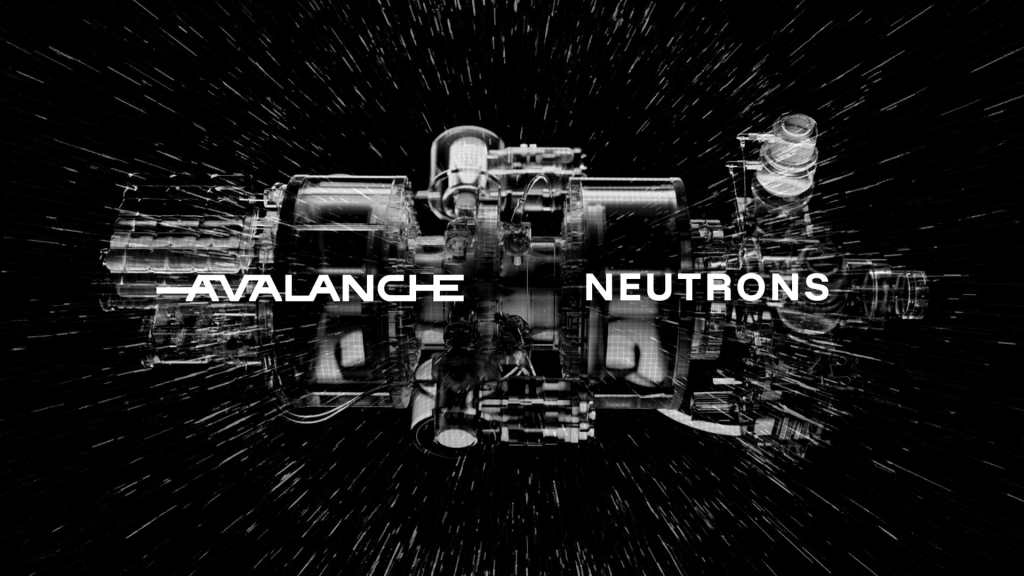
The Pentagon’s research arm has awarded $5.2 million to a Seattle-based fusion startup, part of a broader effort to develop compact nuclear power sources for military and space applications where conventional energy systems fall short.
The company, Avalanche Energy, said it will use the funding from the Defense Advanced Research Projects Agency, DARPA, to develop micro-fabricated energy conversion cells that turn radiation from radioisotopes into electricity. The project is part of DARPA’s “Rads to Watts” program, which is focused on building long-lived, compact power systems for use in environments where resupply or sunlight is limited or impossible.
The devices under development are sometimes described as nuclear batteries. In practice, they rely on converting the energy of alpha particles—charged particles emitted during radioactive decay—directly into electrical current, in a process the company compares to how solar panels convert light into electricity.
If successful, the systems could deliver relatively steady power at high energy density. Program targets cited by the company include more than 10 watts per kilogram, a level that would allow small, lightweight systems to power low-energy electronics for extended periods.
DARPA’s interest in the technology reflects a longstanding defense challenge: powering systems in environments where logistics are constrained. That includes deep-space missions, remote installations, and autonomous platforms operating far from established supply chains.
In those settings, batteries degrade, solar power can be unreliable, and fuel resupply is often impractical. Compact nuclear systems, by contrast, offer the prospect of long-duration power without refueling, albeit with significant engineering and safety constraints.
Although the immediate focus is on radioisotope-based systems, Avalanche and DARPA both frame the work as relevant to longer-term fusion energy goals. Fusion reactions, unlike conventional nuclear power plants, produce high-energy charged particles. The company argues that developing materials and microstructures capable of efficiently capturing energy from alpha particles could eventually translate to direct energy conversion in fusion systems.
That connection is central to Avalanche’s broader research agenda, which aims to build compact fusion devices that could eventually be used in defense, space, and industrial applications. The DARPA project is intended, in part, to test whether those energy conversion methods can survive extreme radiation environments over long periods.
The work will be carried out with several academic and government partners, including the University of Utah University of Utah, the California Institute of Technology Caltech, and Los Alamos National Laboratory Los Alamos National Laboratory.
Researchers involved in similar programs have noted that while the physics of direct energy conversion is established, maintaining efficiency and material stability under sustained radiation exposure remains a central challenge. Semiconductor degradation, heat management, and conversion efficiency all remain active areas of research.
The DARPA contract adds to a growing portfolio of government and private funding for Avalanche. The company has also recently raised private capital from venture firms including Founders Fund and Lowercarbon Capital, and has received additional government support through the U.S. Department of the Air Force’s AFWERX program and a Washington State grant supporting fusion research infrastructure.
Despite the new funding, the technology remains at an early stage. Demonstrations are expected to focus on validating basic physics and material durability rather than delivering deployable systems.
Still, the project reflects a broader trend in defense research: investment in energy systems that sit between conventional batteries and full-scale nuclear reactors. Whether those efforts eventually scale into practical fusion power—or remain limited to niche applications like space and remote sensing—remains uncertain.
For now, Avalanche’s work sits in that in-between space: a laboratory effort with near-term defense applications and long-term ambitions that extend to one of energy research’s most persistent goals.
Photo Credits: Avalanche Energy


 The Defense Circuit
Leave a comment