For decades, much of the world’s military power has quietly depended on software written before the internet went mainstream. Deep inside defense bureaucracies and command networks, aging code still tracks personnel, manages spare parts, and routes critical data. These systems were built to last, and they have. But today they are colliding with a new reality in which wars are fought as much with data and networks as with ships, aircraft, and missiles.
Militaries now face a paradox. Their most essential digital systems are also their most outdated, and replacing them outright could disrupt operations. So instead of ripping them out, armed forces are trying something far more delicate: upgrading the digital backbone while keeping the old machinery running.
The shift is visible in how militaries are turning to commercial cloud platforms to modernize legacy workloads. The UK Ministry of Defence has partnered with a major cloud provider to migrate aging systems in a way that boosts resilience and reduces technical debt, without abandoning existing infrastructure. The move reflects a broader pattern in which militaries adopt hybrid architectures, keeping sensitive data in controlled environments while leveraging the scalability and security tools of commercial clouds.
This approach is not without tension. Military planners worry about sovereignty, dependence on vendors, and the risks of placing sensitive data on commercial infrastructure. But the operational benefits are hard to ignore. Cloud platforms offer elasticity, redundancy, and modern cybersecurity capabilities that older on-premise systems struggle to match. For militaries grappling with cyber threats and data-heavy operations, these advantages are increasingly decisive.
In the United States, the modernization push extends beyond infrastructure into the software that underpins everyday military operations. The Navy has launched a sweeping effort to overhaul decades-old business and logistics systems, replacing fragmented platforms with modern enterprise software and data architectures. What sounds like bureaucratic plumbing is, in reality, a strategic upgrade. Logistics systems determine whether ships sail, aircraft fly, and units deploy on time. Personnel systems shape readiness and retention. In an era of contested supply chains and rapid deployments, these digital backbones matter as much as hardware.
Military leaders increasingly see enterprise IT not as a back-office concern but as a strategic enabler. A modern force requires real-time visibility into materiel, personnel, and operations. Without it, even the most advanced weapons can be constrained by outdated data flows and administrative bottlenecks.
The transformation is happening cautiously. Militaries have learned that sweeping, one-time IT overhauls often fail. Instead, they are pursuing phased migrations, running legacy systems alongside modern platforms. The process is slow and complex. Old code must talk to new software. Data must be synchronized across environments. Security approvals can take months. But the incremental approach reduces the risk of outages in mission-critical systems.
There are also human challenges. Engineers fluent in decades-old programming languages are retiring, while younger specialists prefer modern stacks. Maintaining legacy systems while building new ones strains budgets and personnel. Yet the cost of doing nothing is rising. Aging systems are harder to secure, harder to integrate, and increasingly incompatible with modern analytics and automation.
Behind the scenes, militaries are redefining what counts as military power. Data centers, cloud contracts, and enterprise software are becoming as strategically important as tanks and fighter jets. Modern warfare depends on data fusion, AI-driven decision support, and resilient networks. Outdated IT infrastructure is no longer just inefficient; it is a vulnerability.
The modernization of legacy systems is therefore not a one-off project but a long campaign. It unfolds quietly, in procurement contracts and code repositories rather than on parade grounds. Yet its impact will shape how militaries fight, supply, and command forces for decades.
For now, the world’s armed forces are balancing on a digital tightrope, modernizing their foundations while relying on the very systems they are trying to replace. Those that succeed will gain speed, resilience, and informational advantage in future conflicts. Those that fail may find that their greatest weakness lies not on the battlefield, but in the code running beneath it.
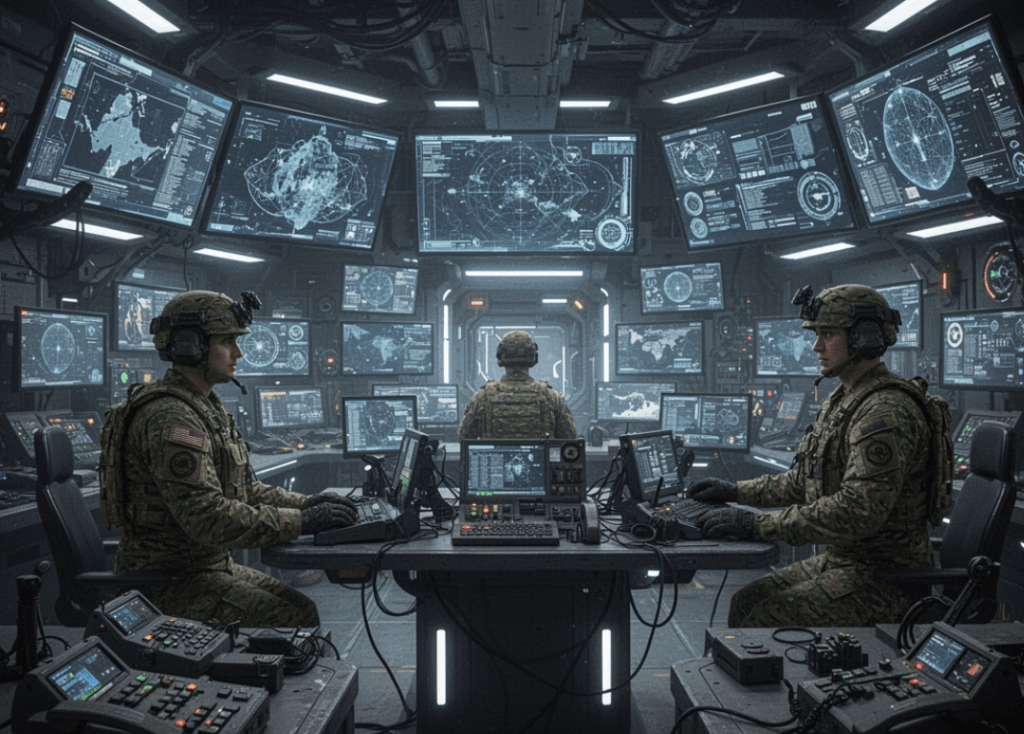
The Battle to Modernize the Military’s Oldest Code
Militaries now face a paradox. Their most essential digital systems are also their most outdated, and replacing them outright could disrupt operations.
3–4 minutes


 The Defense Circuit
Leave a comment