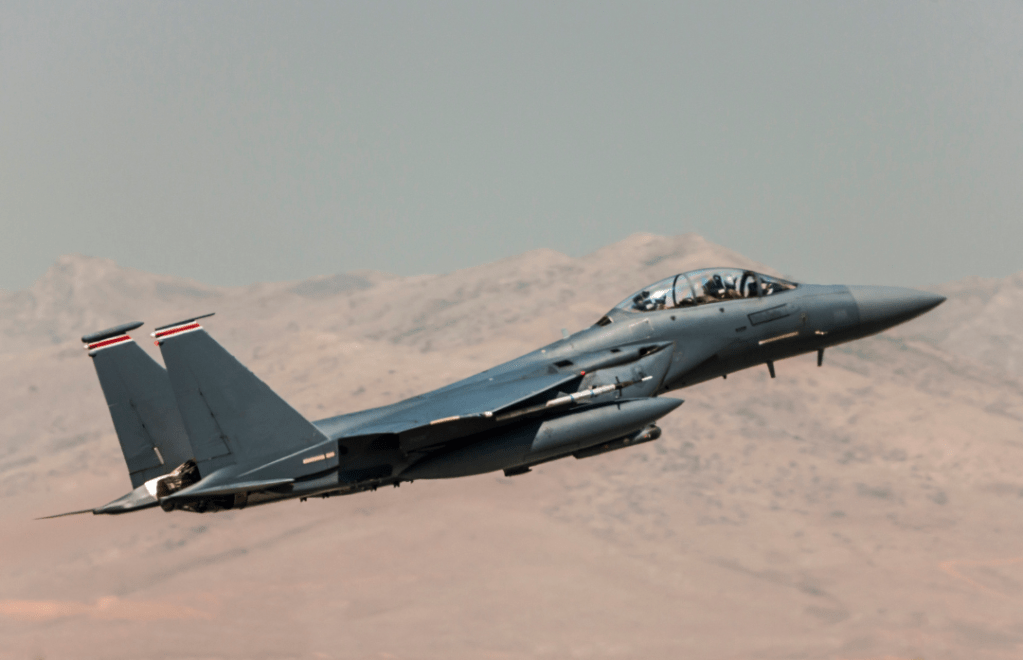
The U.S. Department of Defense has awarded Boeing an $8.6 billion contract to produce a new tranche of F-15 fighter jets for the Israeli Air Force, reinforcing Washington’s long-standing role as Israel’s primary defense supplier amid continued regional conflict.
According to the Pentagon, the contract covers the design, integration, testing, production, and delivery of 25 new F-15IA aircraft, with an option for Israel to acquire an additional 25 jets at a later stage. The program is structured as a Foreign Military Sales (FMS) deal, placing it within the framework of U.S. government–approved arms transfers rather than direct commercial sales.
The F-15IA is expected to be a heavily customized variant tailored to Israeli operational requirements, likely incorporating Israeli avionics, electronic warfare systems, and weapons integration. While specific configuration details have not been publicly released, past Israeli F-15 upgrades have emphasized long-range strike capability, survivability in contested airspace, and interoperability with U.S. platforms.
Contract work will be carried out primarily in St. Louis, Missouri, Boeing’s main combat aircraft production hub. The Pentagon said deliveries and program execution are expected to continue through December 2035, underscoring the long-term nature of the industrial and strategic commitment.
The announcement follows a meeting between U.S. President Donald Trump and Israeli Prime Minister Benjamin Netanyahu in Florida, and comes as Israel continues large-scale military operations in Gaza. Despite sustained domestic and international protests calling for restrictions on U.S. arms transfers to Israel, both the current and previous U.S. administrations have maintained military support, citing strategic alliance commitments and regional security considerations.
For Boeing, the contract provides a significant boost to its defense aviation portfolio at a time when legacy fighter production lines are increasingly reliant on foreign customers. For Israel, the deal ensures continued access to a proven air superiority platform as it balances the integration of fifth-generation F-35s with upgraded fourth-generation aircraft optimized for high-payload and long-range missions.
As regional tensions persist and airpower remains central to Israeli defense planning, the F-15IA program signals a sustained emphasis on depth-strike capability, fleet resilience, and long-term U.S.–Israel defense alignment.



 The Defense Circuit
Leave a comment