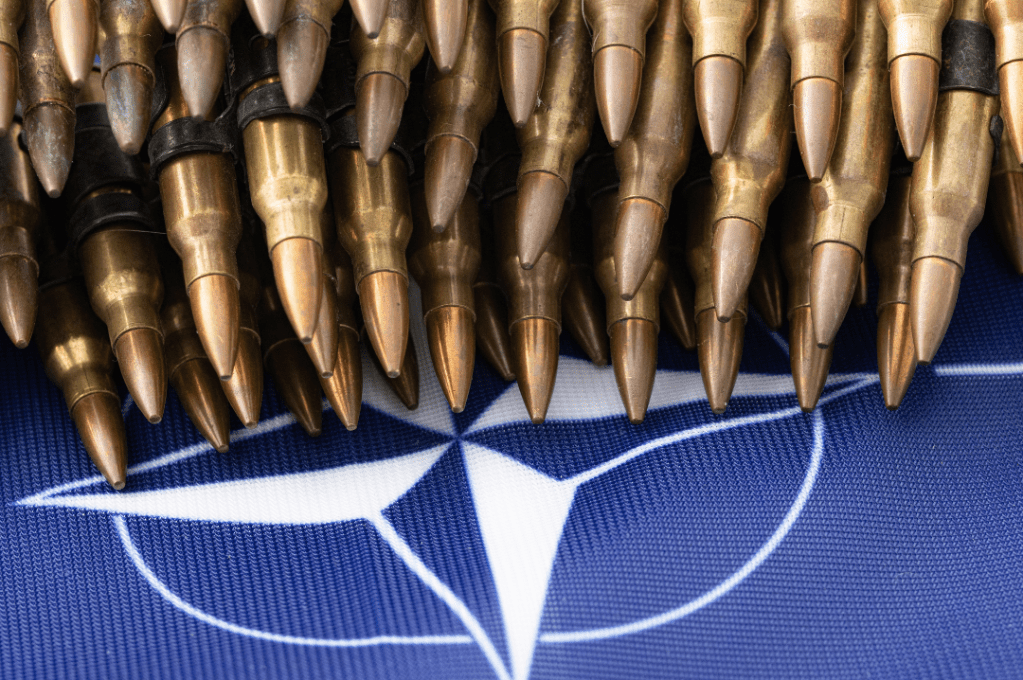
Many defense startups encounter NATO late in their development cycle, often after a product has already proven itself in demonstrations or limited national trials. Interest from a military user turns into questions about integration, certification, and coalition use, and momentum slows. The issue is rarely that the technology does not work. More often, it is that the system was never designed for the environment in which NATO operates. That environment is defined, to a large extent, by standardization.
Within NATO, interoperability is not a desirable attribute but a baseline condition. Forces from different nations are expected to deploy together, exchange data in real time, and rely on each other’s platforms, logistics, and command structures under combat conditions. These expectations leave little room for bespoke interfaces or country specific adaptations. The framework that enables this level of coordination is NATO standardization, formalized through Standardization Agreements, known as STANAGs.
A STANAG is a formally ratified agreement among NATO members that defines a common technical, procedural, or operational standard. These agreements are developed through multinational working groups under the NATO Standardization Organization, informed by operational experience, testing, and lessons learned. Once ratified, member states commit to implementing the standard, either fully or with declared national caveats. Over time, STANAGs become embedded in doctrine, certification processes, and procurement requirements across the alliance.
The purpose of STANAGs is not to enforce uniformity or to constrain national sovereignty. NATO does not attempt to make all forces or systems identical. Instead, standardization focuses on compatibility at the points where forces, systems, and data intersect. This includes how equipment connects, how information is formatted and transmitted, and how systems behave within a shared operational environment. National forces retain control over their internal designs and concepts of operation, while relying on common standards to ensure they can operate together as a coherent force.
As NATO’s operational needs have evolved, so too has the scope of STANAGs. Early standards focused heavily on physical compatibility and procedures, such as ammunition dimensions, fueling practices, navigation references, and map symbology. These remain essential, particularly in sustained or high intensity operations where logistics and resupply across national lines are unavoidable. At the same time, modern STANAGs increasingly address digital and networked aspects of warfare. Communications standards define how unmanned systems are controlled and monitored by coalition partners. Data link and networking standards govern how battlefield information is exchanged securely and reliably. Logistics and medical standards harmonize processes for supply chains, casualty evacuation, and field medical care, allowing forces to support each other without delay or confusion.
This shift reflects the reality of contemporary military operations. NATO now operates as a networked force, dependent on shared situational awareness, distributed sensors, and multinational command and control. In this context, interoperability failures are not minor inconveniences. They can limit how a system is deployed, restrict who can use its outputs, or prevent it from being integrated into a combined operational picture. STANAGs exist to reduce these risks by providing a common technical and procedural foundation.
Standardization also plays a direct role in procurement. While NATO itself does not purchase most equipment centrally, NATO aligned tenders issued by member states or multinational programs routinely require compliance with relevant STANAGs. In many cases, adherence to applicable standards is a mandatory condition of eligibility. Equipment that cannot demonstrate alignment with the required STANAGs may be excluded from consideration, regardless of performance or novelty. Even when standards are not explicitly named in a tender, they are often embedded in technical requirements, evaluation criteria, and acceptance testing.
This has important implications for innovation. STANAGs shape the environment into which new technologies are introduced by defining how they must interact with allied systems. Crucially, most modern standards do not dictate how a capability must be built internally. They specify interfaces, data formats, performance envelopes, and behavioral expectations. This approach has encouraged the development of modular architectures and open systems, particularly in areas such as unmanned platforms, networked sensors, and decision support software. Technologies such as autonomous systems and AI enabled analysis tools are increasingly developed with these constraints in mind, because coalition operations depend on predictable and interoperable behavior.
For startups, engaging with STANAGs can be particularly challenging. The standards are written through multinational consensus processes and are often dense, technical, and shaped by long standing military assumptions. Determining which STANAGs are relevant to a specific product, and how strictly they are applied in different national contexts, can be difficult without prior exposure to NATO procurement or operational testing. Documentation alone rarely conveys how standards are interpreted in exercises or real operations.
There is also a structural tension between the pace of startup development and the deliberate rhythm of military standardization. Early architectural decisions made to optimize speed, cost, or performance can later complicate interoperability if they diverge from established interfaces or data models. Addressing these issues late in development can be costly and disruptive, particularly for smaller companies with limited engineering and certification resources. At the same time, STANAGs are not static obstacles. They evolve alongside operational needs and technological change, and many are deliberately written to accommodate innovation as long as interoperability is preserved.
STANAGs rarely feature prominently in public discussions about NATO, yet in practical terms they define the threshold for participation in the alliance’s operational and procurement ecosystem. They translate political alignment into enforceable technical and procedural requirements that determine whether a system can be integrated, certified, and fielded alongside allied forces. For startups, this distinction is decisive. Equipment that aligns with relevant STANAGs can move from national interest to multinational use, while those that do not often remain confined to demonstrations, pilots, or limited domestic adoption, regardless of their underlying capability.

 The Defense Circuit
Leave a comment