
Have you seen the new drone system that launched last week? Your answer is probably, “Which one?” Every week, a new “revolutionary” UAV makes headlines: smaller, faster, more autonomous. Technology in this field evolves at breathtaking speed, and from the outside, it often seems as if the race for innovation is all that matters in modern warfare.
But after years inside a UAV command room, I’ve learned something simple yet essential: even the most advanced system still depends on the people who operate it. The real question is not whether humans should remain in the loop, but how much their skills still determine mission success, and how that balance will evolve in the future.
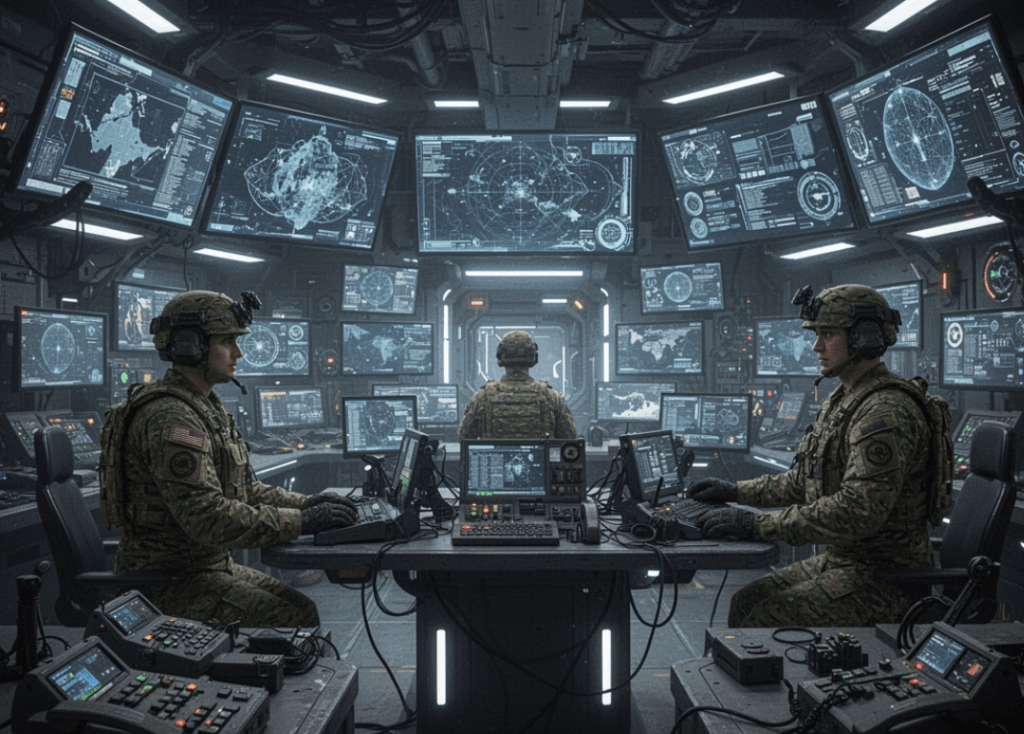
During my service in a special UAV unit, I took part in hundreds of missions, each unique in its pressure and complexity. One thing became clear: technology doesn’t always win missions, people do. When experienced and well-trained crews led operations, decisions were quicker, coordination smoother, and confidence shaped every move. Less experienced crews, using the same systems and tools, often produced slower and less decisive outcomes. The difference was never the drone or the software; it was the operator’s understanding, judgment, and teamwork.
Some argue that machines are already capable of making life-and-death decisions. Look at self-driving cars, they say. It’s true that autonomous vehicles can react to split-second ethical dilemmas, such as a child running into the street or a collision unfolding ahead. But warfare is not a controlled environment. The battlefield is fluid, deceptive, and morally complex. Algorithms can classify, calculate, and predict, but what they cannot yet do is understand the meaning behind an action: the intent of a target, the political cost of a strike, or the restraint that saves lives. That level of judgment remains human.
Looking forward, the challenge is not to preserve the human role for tradition’s sake, but to redefine it intelligently. At the core lies a “Golden Triangle” of machine, software, and human. Each element has different strengths and weaknesses, and when developed together, they form a true force multiplier. Training must shift from pure technical control of the platform to mission leadership, where the operator becomes the bridge between technology, intelligence, and the battlefield. Artificial intelligence should be used to analyze operator performance, simulate realistic and adaptive combat environments, and deliver personalized feedback. Experience should no longer be earned slowly through combat but learned safely through intelligent simulation.
Real progress will not come from replacing humans with machines but from designing them to evolve together. Technology provides capability and speed, while the human provides judgment, creativity, and meaning. To make that possible, training must remain the foundation that cultivates those human strengths, ensuring that the operators behind the screen are as advanced, adaptable, and prepared as the systems they command.
Submitted by Ido Govrin, a UAV Navigator and Systems Operator in the Israel Defense Forces, specializing in real-time mission execution, aerial intelligence, and the integration of emerging defense technologies into tactical operations. Drawing on his experience in special operations, he focuses on bridging the gap between field realities and technological innovation. He writes about defense technology, operational design, and the evolving role of autonomy in modern warfare.
 The Defense Circuit
Leave a comment