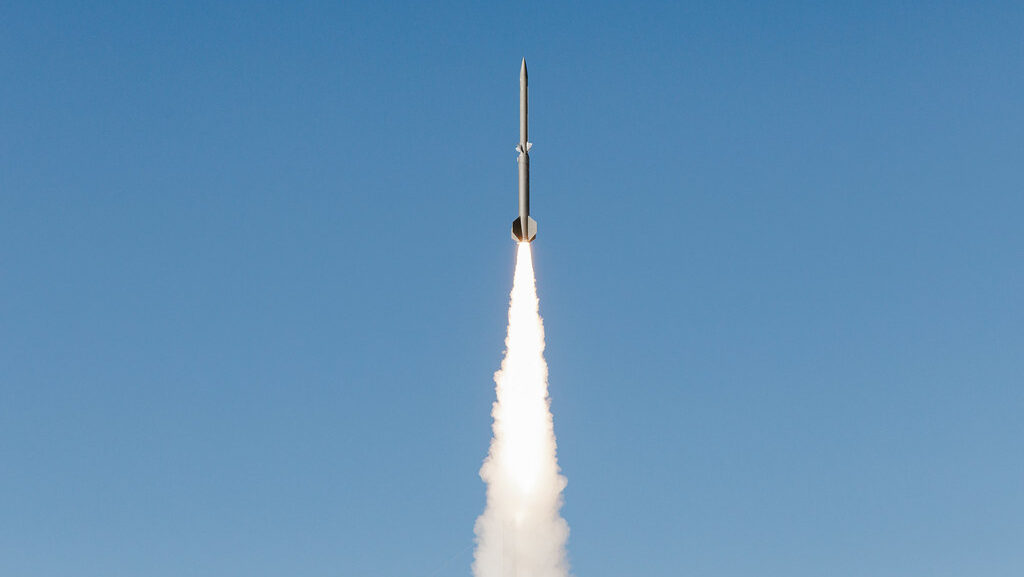
The United States military is moving to adapt its next-generation hypersonic weapons for mobile launch platforms, marking a significant shift in how the Pentagon plans to deploy high-speed, precision-strike systems. Defense startup Castelion announced that it has secured contracts to integrate its Blackbeard hypersonic strike weapon with U.S. Army and Navy platforms, a development that positions the company at the forefront of the evolving hypersonic race.
The integration will focus initially on incorporating Blackbeard with the High Mobility Artillery Rocket System (HIMARS), a launcher that gained global recognition during the war in Ukraine. The move would allow U.S. forces to field hypersonic capabilities on flexible, rapidly deployable platforms rather than relying solely on fixed or strategic assets.
According to the company, Blackbeard is designed for mass production and rapid fielding at a fraction of the cost of legacy hypersonic systems. Castelion aims to produce thousands of units annually, with each weapon priced in the hundreds of thousands of dollars. This represents a dramatic reduction in cost compared to traditional hypersonic or ballistic systems that typically run into the millions per unit.
Terms of the Army and Navy integration contracts were not disclosed. However, President Donald Trump’s proposed 2026 defense budget earmarks $25 million for future integration of similar capabilities, underscoring Washington’s growing emphasis on affordable, scalable strike systems.
A section of the Army’s proposed 2026 budget describes the Blackbeard Ground Launch (GL) mission as one intended to “attack, neutralize, suppress, or destroy using hypersonic missile-delivered precision fires against time-sensitive moving targets and hardened targets at a much-reduced cost per missile than currently exists in the Army inventory.” The document also notes that the system is designed to leverage rapid design cycles, modern manufacturing practices, and flexible hardware development to deliver adaptable precision capabilities.
Unlike traditional ballistic missiles that follow predictable trajectories, hypersonic weapons can change direction mid-flight while traveling at speeds exceeding Mach 5, making them extraordinarily difficult to intercept with existing air defense systems. This capability gives them a strategic advantage in contested environments, especially against adversaries with advanced missile defense networks.
The contracts with Castelion reflect a broader U.S. strategy to diversify its hypersonic portfolio beyond highly classified, high-cost systems toward solutions that can be deployed at scale. Hypersonic weapons are seen as a key area of competition between the United States, China, and Russia, each investing heavily in systems designed to deliver long-range, precision effects while evading traditional missile defenses.
Other U.S. firms, including Stratolaunch, Raytheon (a division of RTX), and Lockheed Martin, are also competing to deliver operational hypersonic capabilities. For Castelion, which only emerged in recent years as a player in the defense startup ecosystem, the Blackbeard program represents a breakthrough opportunity to demonstrate that smaller firms can bring innovation and cost-efficiency to one of the Pentagon’s most technically demanding domains.
As the global race to field hypersonic weapons intensifies, the Pentagon’s bet on mobile, affordable systems such as Blackbeard could redefine the operational landscape. If successful, it may allow U.S. forces to project power through agile launchers rather than static infrastructure, transforming how the next generation of high-speed strike systems are deployed across the globe.


 The Defense Circuit
Leave a comment