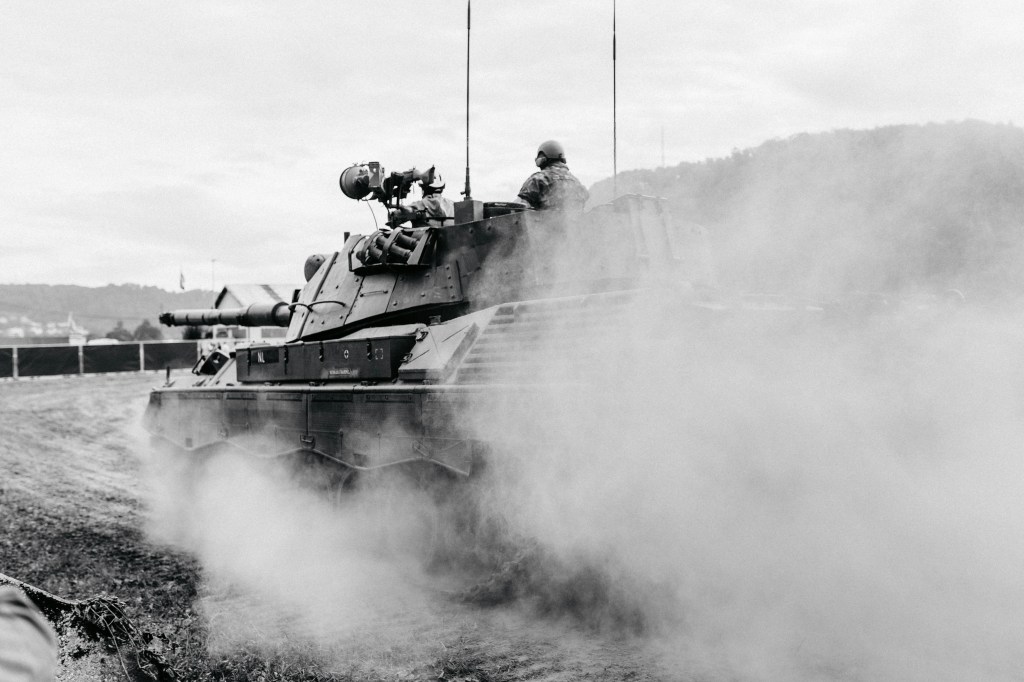
European nations are dramatically increasing their defense budgets in response to growing security challenges, with many countries aiming to exceed NATO’s traditional 2% GDP spending target. This surge in military investment comes as European leaders grapple with concerns about U.S. reliability as a security partner and the continued was in Ukraine.
The European Union is exploring multiple funding mechanisms to raise an estimated $420 billion annually in additional defense spending. This would effectively double current levels from 2% to 4% of GDP across member states. The funding is expected to come through a combination of national budgets, EU funds, and potentially new financial vehicles.
Denmark has announced one of the most aggressive spending increases, with Prime Minister Mette Frederiksen directing an additional 50 billion crowns ($7 billion) for immediate military procurement. “There is one message for the chief of defense: Buy, buy, buy,” Frederiksen stated, emphasizing speed over perfect procurement processes. This will raise Denmark’s defense spending to 3.2% of GDP by 2025.
The European Commission is working to facilitate these increases by relaxing fiscal rules that typically restrict government spending. Commission President Ursula von der Leyen has proposed allowing defense expenditures to be exempt from EU debt and deficit calculations “in a controlled and conditional way.”
However, challenges remain in coordinating this massive military buildup. The EU currently operates 15 different types of battle tanks compared to just one in the United States, highlighting inefficiencies in Europe’s fragmented defense industry. European leaders acknowledge that simply spending more money without addressing industrial fragmentation could lead to waste.
In the Pacific region, similar concerns are driving defense investments. New Zealand’s Defence Minister Judith Collins has signaled upcoming “big budget” investments in response to increased Chinese naval activity in the region, stating “we cannot hide at this end of the world anymore.”
The Czech Republic has joined other nations in calling for defense prioritization, with Prime Minister Petr Fiala arguing that EU funds should be redirected from “non-essential projects” like cycle paths toward security and defense spending. The Czech Republic met NATO’s 2% target in 2024, a year ahead of schedule.
These spending increases are occurring against a backdrop of broader geopolitical shifts, including heightened tensions with Russia and uncertainty about long-term U.S. security commitments to Europe. European leaders are increasingly focused on developing autonomous defense capabilities while maintaining existing alliance structures.
The financial implications of this military buildup are significant, with many countries facing potential impacts on their sovereign credit ratings and public finances. However, leaders argue that the security situation leaves them no choice but to make these investments, even in the face of economic challenges.


 The Defense Circuit
Leave a comment