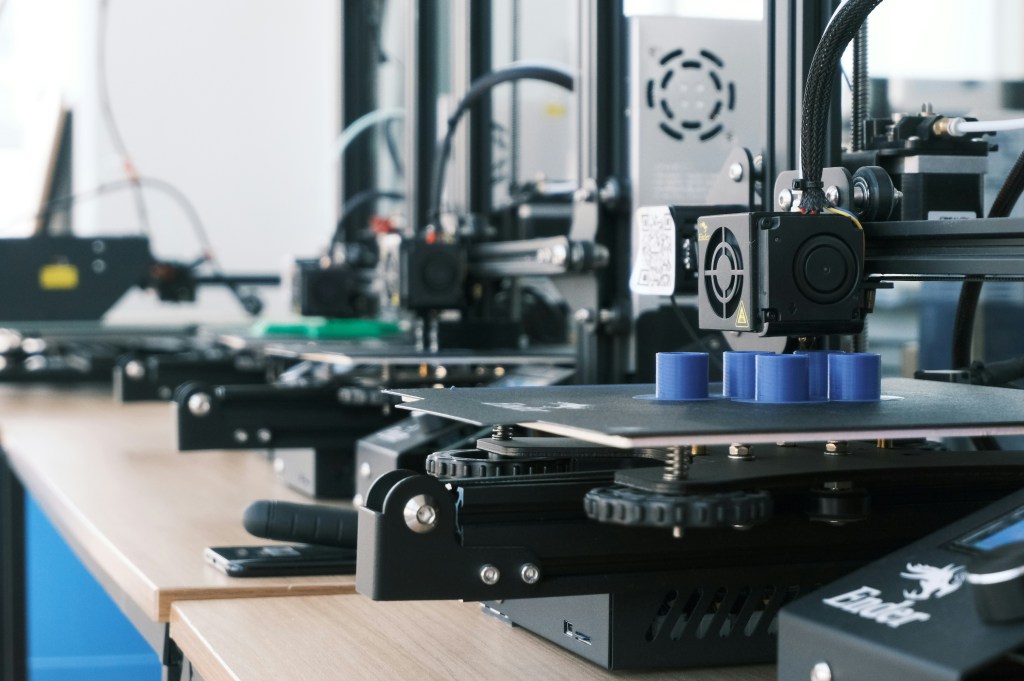
Austin-based Supernova Industries Corp has secured a $2 million subcontract to pioneer the 3D printing of military-grade energetic materials, marking a potential breakthrough in defense manufacturing capabilities.
The contract, awarded through the American Center for Manufacturing & Innovation’s (ACMI) Critical Chemicals Pilot Program, aims to leverage Supernova’s proprietary Viscous Lithography Manufacturing (VLM) technology to address critical gaps in the U.S. defense industrial base.
“Our technology has the potential to overcome the design constraints of conventional manufacturing methods to produce the next generation of military-grade energetic material components, including solid rocket motors, explosives and pyrotechnics,” said Roger Antunez, Supernova’s founder and CEO.
The company’s VLM process utilizes a transparent film to transfer high-viscosity materials onto a build platform, where they are cured by light to form printed parts. Unlike traditional processes that require low viscosity resins, VLM can handle materials of “unlimited viscosity,” enabling new formulations such as the high solid-loading used in energetic materials.
This capability could prove crucial for the Department of Defense, which has been grappling with explosives supply chain challenges. The U.S. Army, for instance, aims to increase its 155mm munitions production to 100,000 per month by the end of 2025, but securing sufficient explosives has been a key constraint.
“You have to produce enough explosives – either IMX-104 or TNT – to fill that many shells that fast, and that production capacity does not exist in the United States by itself,” noted Doug Bush, who served as the Army’s acquisition chief under former President Joe Biden. “We’re having to go overseas to allies.”
The Supernova contract represents part of a broader push to strengthen domestic production capabilities. Victor Boelscher, federal programs head at ACMI Federal, emphasized that the program “is designed to support Defense Industrial Base resilience by taking commercial solutions and rapidly adapting them for DOD use.”
Supernova, which launched its Defense & Space division in Austin in 2024, has already demonstrated success in printing simulant energetic materials. The company is now developing printing capabilities for actual energetic formulas, which could be used in applications ranging from solid rocket motors and bombs to countermeasure flares and bullet grains.
The $2 million subcontract was distributed through the Department of Defense Information Analysis Center’s multiple-award contract vehicle, supporting the Pentagon’s Industrial Base Policy Manufacturing Capability Expansions and Investment Prioritization Pathfinders portfolio.



 The Defense Circuit
Leave a comment